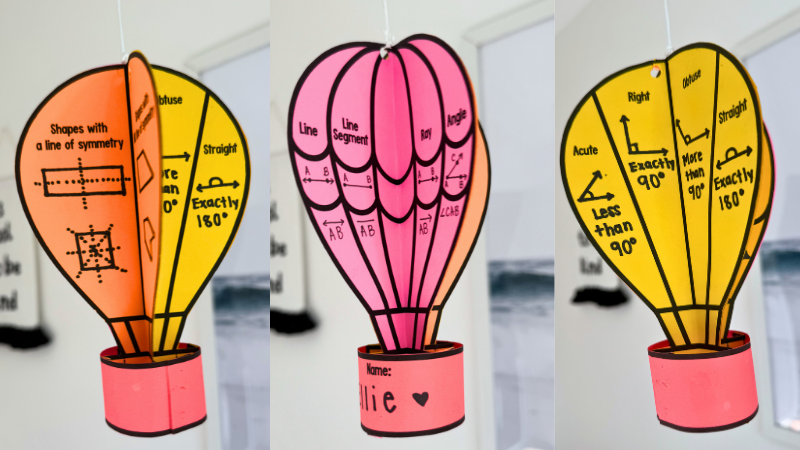
Geometry can be one of the trickiest units to teach well.
Not because students can't do it—but because geometry often becomes very vocabulary-heavy very quickly. Students may understand a picture or concept, but then get stuck on terms like ray, line segment, parallel, perpendicular, acute, obtuse, or line of symmetry.
That's why, in my classroom, I try to make geometry as visual, hands-on, interactive, and easy to reference as possible.
If your geometry unit starts to feel repetitive (or students keep mixing up terms), these are some of my favorite ways to make it more engaging and effective.
Why Students Struggle in Geometry (and What Helps Most)
A lot of geometry frustration comes down to one thing:
Vocabulary
Students may know what they're looking at, but they can't always name it, compare it, or explain it.
When that happens, they struggle with:
- Class discussions
- Practice problems
- Worded questions
- Test questions
- Even showing what they already know
The #1 Recommendation
Start with visible geometry vocabulary. If students can constantly reference geometry terms during lessons and independent work, they become more confident and independent much faster.
That's why vocabulary posters are one of the most helpful tools in this unit.
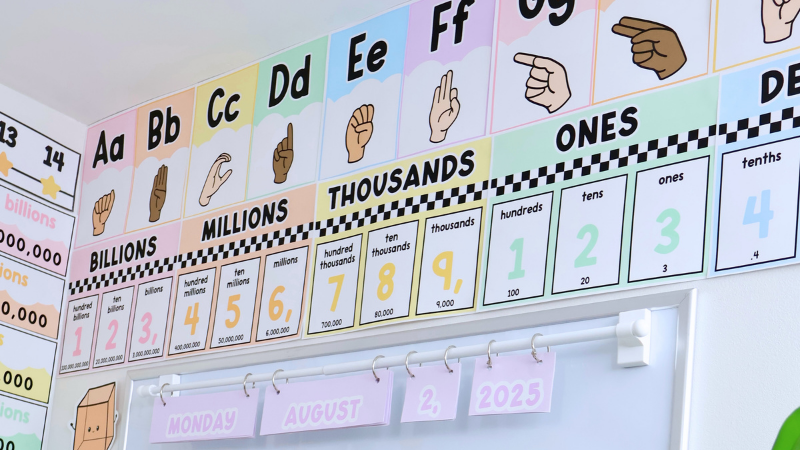
My Favorite Geometry Activities and Resources
Here are 5 geometry activities/resources I use to keep the unit engaging and easier to teach.
1. Geometry Vocabulary Posters (Most Important First Step)
If I had to pick just one thing to do during a geometry unit, this would be it.
Geometry moves faster when students can:
- See the words
- Connect them to visuals
- Refer back to them while they work
Vocabulary posters help students:
- Understand definitions more clearly
- Use math terms during discussions
- Answer questions with more confidence
- Work more independently
- Retain vocabulary over time
How I Use Them
Put up relevant vocabulary at the start of the unit/module. Refer to the posters during instruction. Encourage students to use the words in partner talk. Point students back to the wall when they ask vocabulary questions. Keep them up throughout the unit for repeated exposure.
2. Blooket for Geometry Review + Finding Gaps
This is one of the most efficient ways to make geometry review more fun and get useful data.
A resource like Blooket (free option available) can quiz students on geometry concepts and vocabulary, and then you can review the results to see what students are missing most.
That's what I love about it:
- Students feel like they're playing a game
- You get quick feedback
- It helps you spot gaps in understanding
- You can use the data to decide what to reteach whole-group
Teacher Tip
After a Blooket review, look for the most missed vocabulary words, question types students commonly miss, and whether the issue is concept understanding or language/wording. Then reteach the high-impact gaps first.
3. Angles, Lines, and Symmetry Pop-It Game (Great for Early Finishers)
This is one of my students' favorite geometry games.
I like using a geometry pop-it game because it gives students a fun way to keep reviewing concepts without it feeling like "more worksheets."
How I Use It
We play it once as a class so students learn how it works. Then I use it for early finishers. Students look forward to it because they already know the game format.
Why it works:
- Review through play
- Repeated exposure to geometry vocabulary
- Easy early finisher option
- Low prep after the first time you teach it
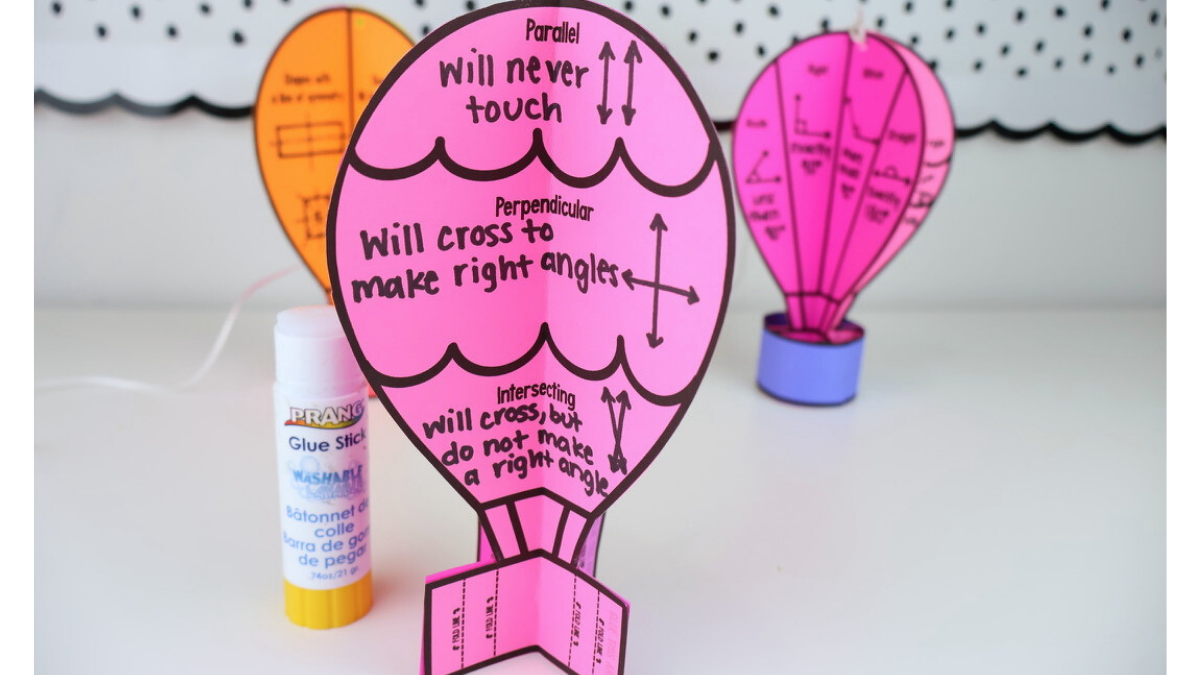
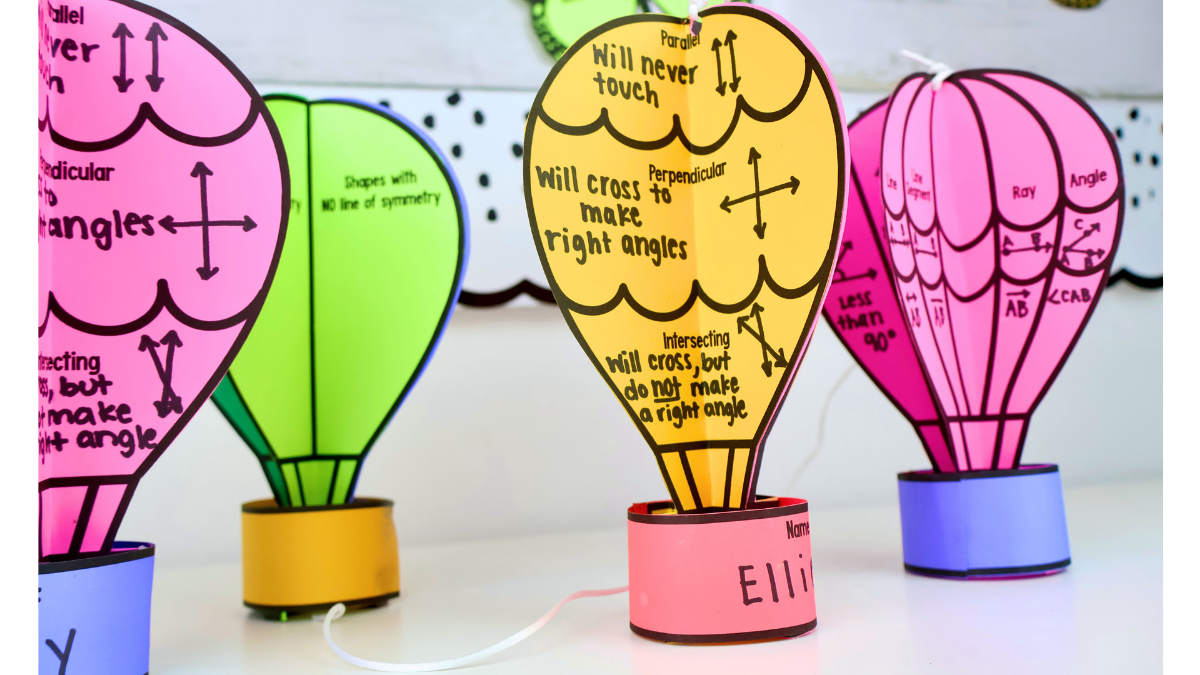
4. 3D Hot Air Balloon Geometry Craft (Great for Review + Study Tool)
This is such a fun way to review geometry vocabulary and concepts in a way students actually remember.
What I like about this type of craft is that it puts multiple concepts together in one visual/hands-on piece. Instead of reviewing isolated terms, students organize the information into something they build.
Why I'd use it during geometry:
- End-of-unit review
- Vocabulary reinforcement
- Hands-on assessment option
- Partner review/study activity
- Classroom display that stays up as a reference
It can be:
- A study tool
- A review project
- A display piece
- A conversation starter during math centers
Students can literally use it to review by spinning/looking at sections, which makes it more memorable than a flat review sheet.
🧪 How Students Use It
Study Tool, Review Project, Display Piece, or Math Center Activity
Students can literally use it to review by spinning/looking at sections, which makes it more memorable than a flat review sheet.
5. 2D and 3D Shape Posters (Optional but Great for Visual Support)
These are not the "main" thing I'd build the unit around—but they're a great visual support if you want your room to clearly display shape vocabulary in a student-friendly way.
I think these are especially helpful if:
- Students mix up 2D vs 3D vocabulary
- You want an easy shape reference wall
- You're trying to make your math space more visual and organized
- You want something cute and functional
These can work as:
- Wall display
- Shape reference station
- Anchor support during lessons
- Visual reminders during independent work
A Simple Geometry Unit Routine
If geometry starts feeling repetitive, it helps to rotate how students interact with the content.
During Instruction: Teach concept + model with visuals. Refer to vocabulary posters as you teach. Have students say the vocabulary out loud.
During Review: Use Blooket to check understanding and spot gaps. Reteach most-missed terms/skills whole-group.
During Independent/Early Finisher Time: Use a geometry game (like the pop-it game) for continued review.
End of Unit: Use a hands-on review craft (like the hot air balloon) to bring everything together.
This gives students multiple ways to practice:
- Seeing
- Saying
- Identifying
- Classifying
- Explaining
- Reviewing
That variety helps geometry stick!
Quick Recap
If your students struggle during geometry, start here:
- Make vocabulary visible (posters/reference wall)
- Use game-based review (Blooket) to spot gaps
- Reteach the most missed terms whole-group
- Use a favorite review game for early finishers
- End with a hands-on review activity to pull concepts together
Remember
Geometry gets easier when students can see the words, use the words, and practice the words in multiple ways.
Geometry Resources I Mentioned
If you want ready-to-use geometry resources, here are the ones I mentioned. These all help make geometry more visual, interactive, and easier to review.
Geometry Activities + Visual Supports:
- 3D Hot-Air Balloon Math Craft (Angles, Lines and Symmetry, 4th–5th Grade)
- 2D and 3D Shape Posters (Pastel Vibes / Kawaii Style)
- Angles, Lines, Symmetry Pop-It Geometry Game (for any pop-it)
Math Vocabulary Posters (Grades 1–6): I use these heavily during geometry because they help students understand terms, participate in math talk, and work more independently. Available in Pastel, Boho, and Brights themes!
Teacher Note
Geometry can start to feel repetitive fast, so I try to make it as visual and interactive as possible. Vocabulary support + a few go-to games/activities makes a huge difference!